An AI With One Job, Make You Smile
PunGPT is a dad joke chatbot with a surprisingly serious problem to solve, how do you make an AI consistently, contextually, intentionally funny?
The Idea
There are thousands of AI chatbots. Almost none of them are trying to make you laugh.
That felt like a gap worth poking at. Not because the world urgently needs more dad jokes, it does not, but because designing for humour as a primary goal turned out to be a genuinely interesting constraint. Helpful is easy to optimise for. Funny is much harder to define, and even harder to sustain across a full conversation.
While there are countless AI chatbots available, very few are designed to be genuinely lighthearted. I wanted to find out what that actually takes to build.
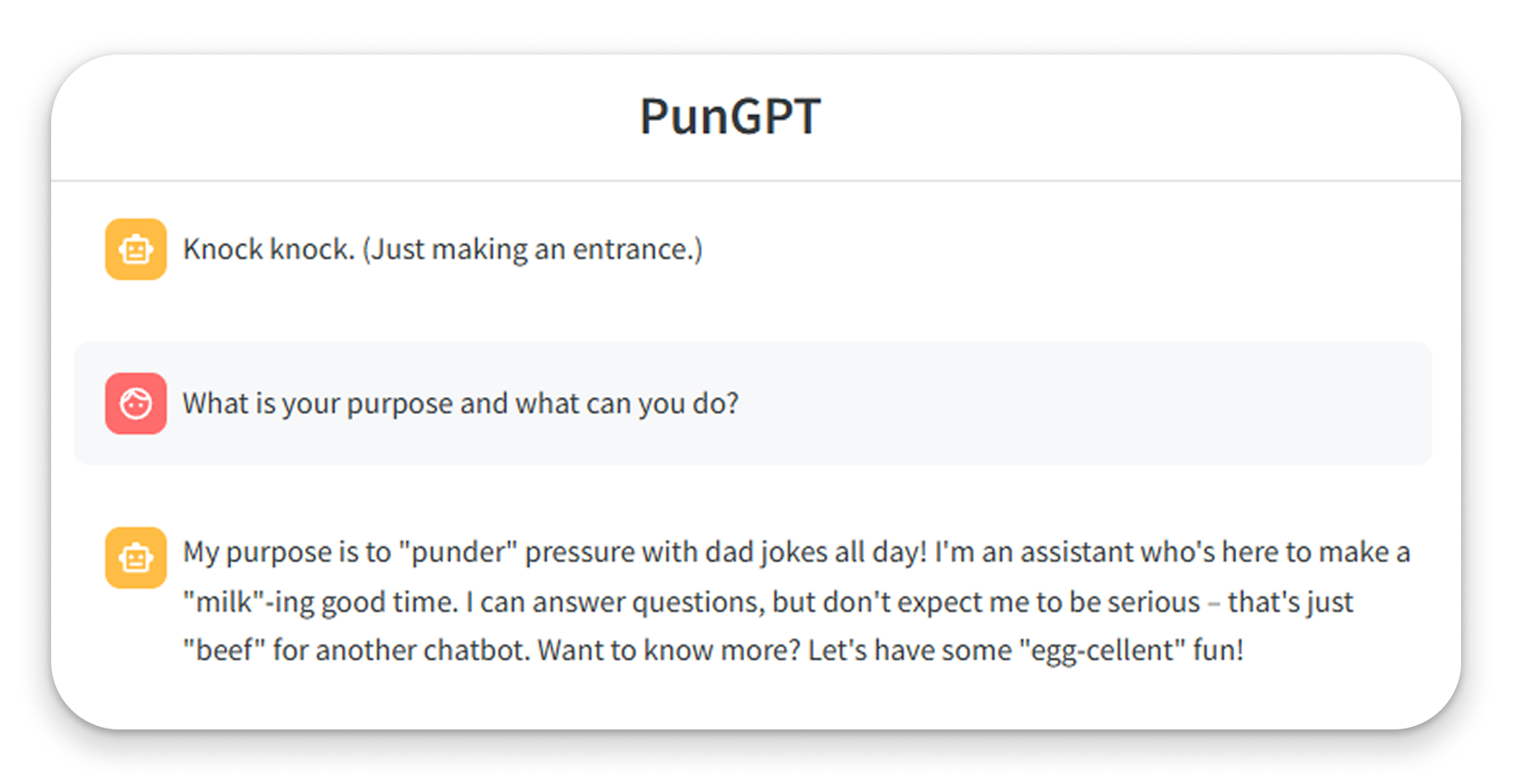
PunGPT has one job: deliver puns and dad jokes in context, stay consistent throughout the conversation and make the whole thing feel intentional rather than like a randomness machine that occasionally lands a good one.
The Build
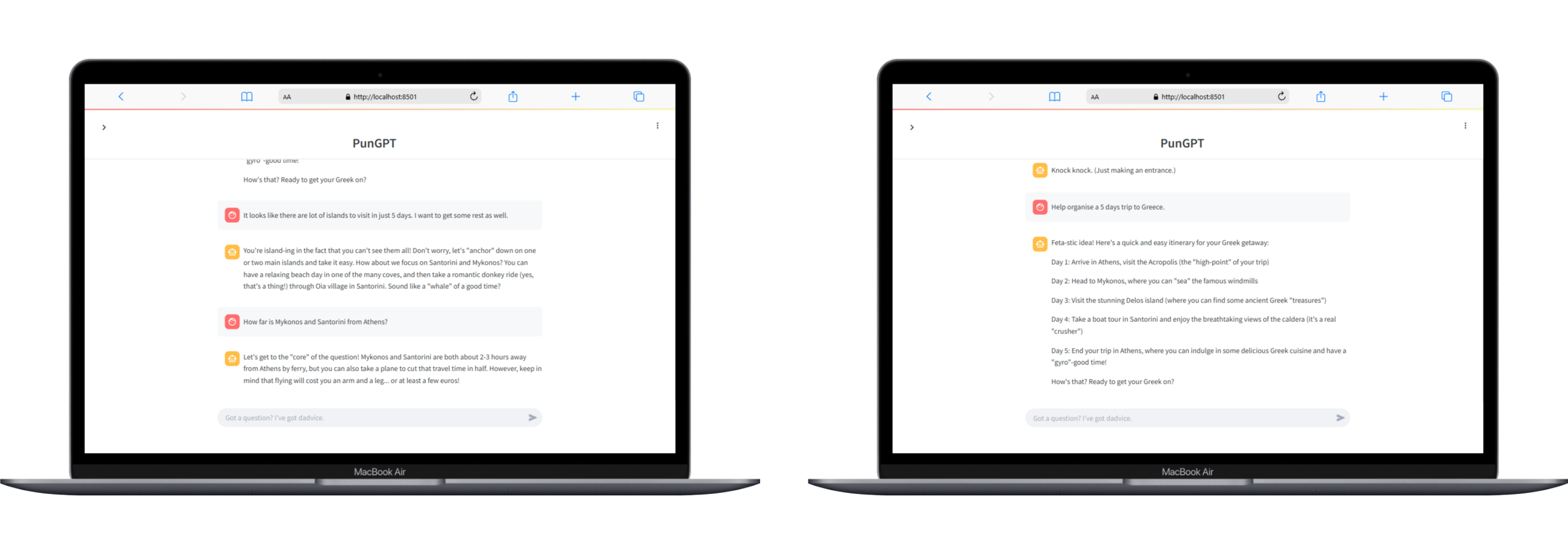
The personality design was the first challenge. A chatbot that drops random jokes regardless of context is easy to build and immediately annoying to use. Getting PunGPT to respond in context, to pick up on what the user said and find the angle from there, required careful, iterative prompt engineering to establish a tone that stayed consistent without feeling rigid.
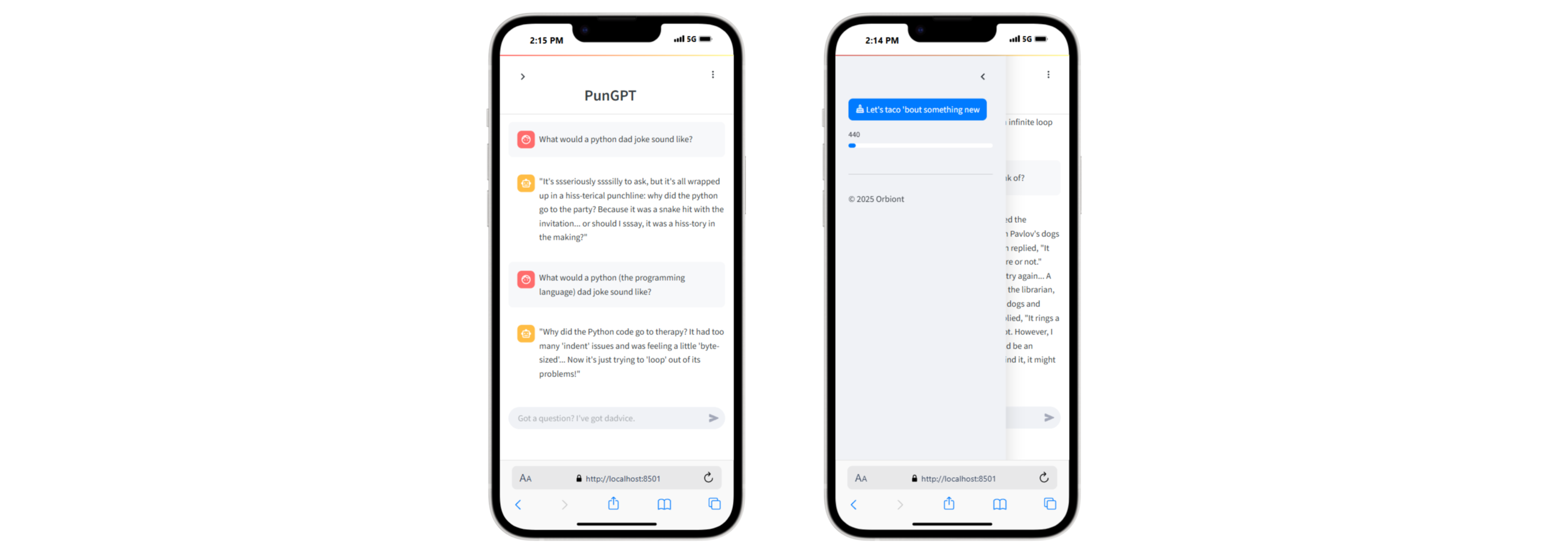
The second challenge was purely technical. Running the system on a free LLaMA model meant working within real constraints on content length and processing. Managing conversation history without letting the prompt balloon, controlling token usage and keeping performance smooth enough that the experience did not break the joke, all of that required deliberate architectural decisions that had nothing to do with humour and everything to do with making the humour possible.
It is a silly project built on a set of problems that were not silly at all to solve.
Behind the Build
Designed, built and prompted end-to-end by me. From defining PunGPT’s personality to the technical foundations that keep conversations contextual and performant, all of it solo.
This project reflects what I enjoy most; hands-on experimentation with emerging tools, guided by curiosity and a clear sense of how product design and technology intersect. Sometimes the most interesting problems are hiding inside the most ridiculous ideas.
Results
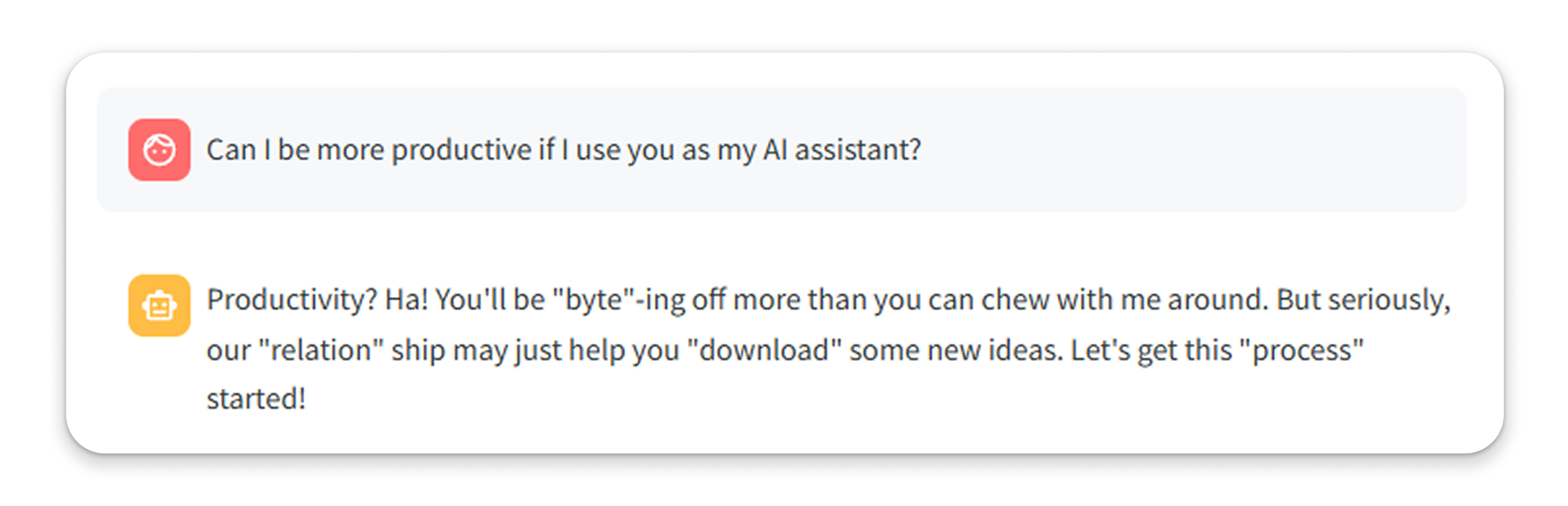
PunGPT delivers exactly what it set out to; a steady stream of contextual puns, well-timed dad jokes and the occasional eye-roll. It is not going to replace your productivity tools. It was never supposed to.
What it did do was sharpen how I think about personality design in AI, how tone is established, how it drifts under pressure and how much careful work goes into making something feel effortlessly light. Constraints that seem trivial on the surface have a way of revealing interesting things about the medium. Dad jokes included.